

Начини за изразяване на бъдещо действие
В английския език има седем начина за изразяване на бъдещо действие. За да направим изборът по-лесен из между седемте опции, нека си представим един седмоъгълник, на който по средата е поместено действието, което предстои да се случи в бъдещето. Според нашето лично отношение спрямо събитието от бъдещето, ние правим и съответния избор из между една от седемте опции. Например, ако събитието е изучаване на английски в бъдещ момент, то отношението към предстоящото начинание би могло да бъде не много сериозно, в следствие на наше спонтанно решение. То тогава вярната отпция би била бъдеще просто време /Future Simple/. Ако намерението ни е предварително обмислено, то тогава го отразяваме с to be going to.
Избирайки съответното време или граматическа конструкция, ние винаги се ръководим от идеята, личното отношението към събитието и търсим съответната граматика, чрез която да го пресъздадем. За да е верен изборът ни, е нужно да познаваме добре граматическите времена в частта „употреба“.
Пристъпвам към подробно представяне на всяко от седемте начина за пресъздаване на действие от бъдещето. На този първоначален етап таблицата дава обобщена представа за тях.
Запознайте се с индивидуалното обучение по бизнес английски език.
Запознайте се с индивидуалното подготовка за интервю за работа на английски език.
Бъдещи времена в английския език. Видове. Същност.
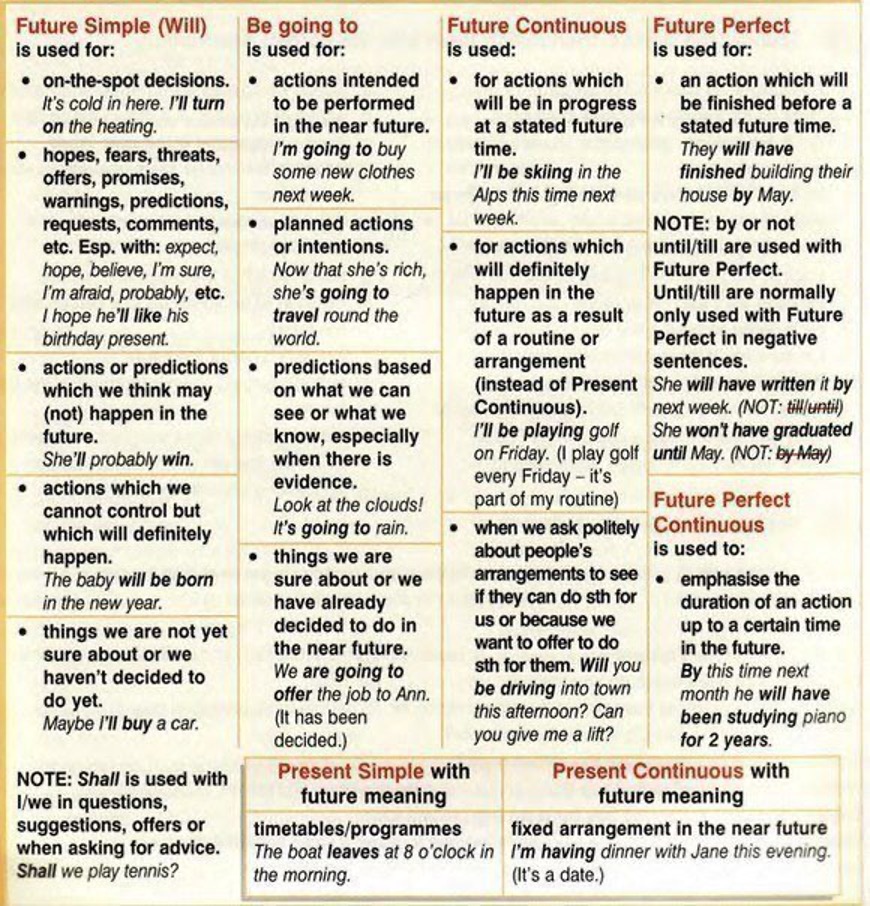
Future Simple
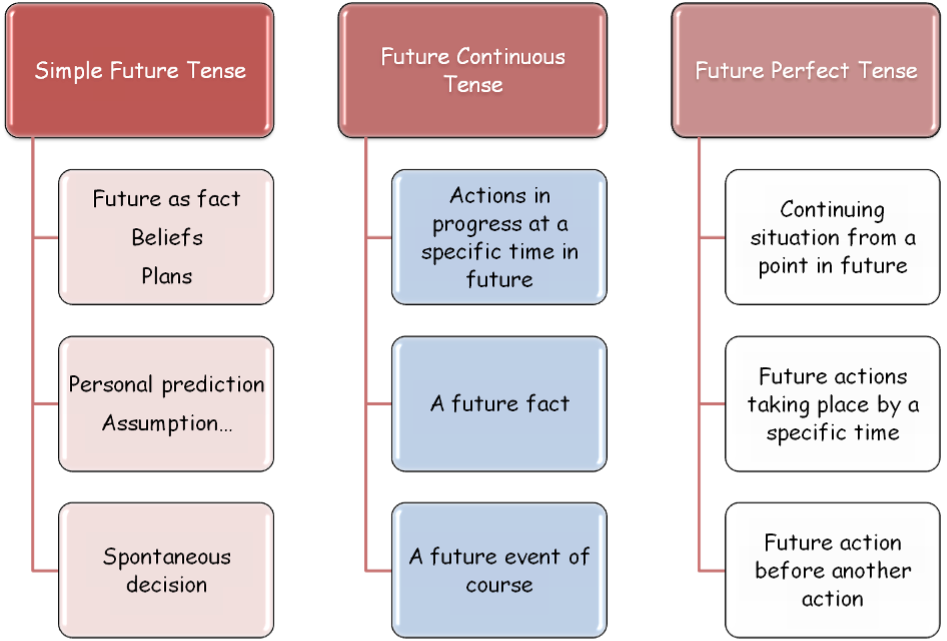
Бъдеще просто време използваме в случаите, когато:
- Взимаме спонтанно решение
- Правим прогноза за бъдещето, базирана на лично мнение, при което прогнозата е несигурна.
- За отразяване на бъдещо действие, което е извън нашия контрол
Will future expresses a spontaneous decision, an assumption with regard to the future or an action in the future that cannot be influenced.
Ето и начинът, по който спрягаме глагола:
Form of will Future
| Positive | Negative | Question | |
|---|---|---|---|
| no differences | I will speak. | I will not speak. | Will I speak? |
Use of will Future
- a spontaneous decision
example: Wait, I will help you.
- an opinion, hope, uncertainty or assumption regarding the future
example: He will probably come back tomorrow.
- a promise
example: I will not watch TV tonight.
- an action in the future that cannot be influenced
example: It will rain tomorrow.
- conditional clauses type I
example: If I arrive late, I will call you.
Signal Words
- in a year, next …, tomorrow
I think, probably, perhaps
To be going to
- Intention
- Certain prediction
To be going to използваме в случаите, когато желаем да изразим предварително обмислено намерение за бъдещето, бъдещ план. В този случай прогнозата, която провим е сигурна поради две причини: съществува намерение или видими доказателство.
What's the difference? 'Will' and 'be going to'
| Will + infinitive | Be going to + infinitive |
|---|---|
| A decision at the moment of speaking: Julie: There's no milk. John: Really? In that case, I'll go and get some. | A decision before the moment of speaking: Julie: There's no milk. John: I know. I'm going to go and get some when this TV programme finishes. |
| A prediction based on opinion: I think the Conservatives will win the next election. | A prediction based on something we can see (or hear) now: The Conservatives are going to win the election. They already have most of the votes. |
| A future fact: The sun will rise tomorrow. | |
| For promises / requests / refusals / offers: I'll help you tomorrow, if you like. |
More examples:
- (The phone rings)
Julie: I'll get it!
('I'm going to get it' is very strange, because it makes us think that Julie knew the phone was going to ring before it did).
- I'm going to go on holiday next week.
('I'll go on holiday next week' makes it sound like you've only just decided at that minute. Of course, this is possible, but normally we plan our holidays more in advance!).
Present Simple for Future meaning
Използваме сегашно просто време с цел да отразим бъдещо събитие, което е част от програма, разписание, общовалидно за всички.
Timetable
We use the present simple tense in two cases. First, we use it for a timetabled event in the future, like public transport or the start of a class:
- My train leaves at six tonight.
- His class starts at 9am tomorrow.
Second, we use it after certain words, when the sentence has a future meaning. These words are: before / after / as soon as / until / when:
- I'll call you when I get home.
- She's going to study after she finishes dinner.
- Please drink some water as soon as you complete the race.
Present Continuous for future meaning
Използваме сегашно продължително време с цел да отразим бъдещо събитие, което е част от програма, разписание, но е валидно само за подлога.
Arrangement
Чрез сегашно продължително време можем да отразим и събитие от близкото бъдеще.
We use the present continuous tense for definite future arrangements. Often, it doesn't really matter if we choose 'be going to' or the present continuous. In the following example, there is really very little difference in meaning:
- I'm going to the cinema tonight.
- I'm going to go to the cinema tonight.
Future Continuous
Употреба:
Използваме бъдеще продължително време в случаите, когато желаем да отразим събитие от бъдещето, което ще продължи известно време в конкретен времеви отрязък.
Use
- action that is going on at a certain time in the future
- action that is sure to happen in the near future
Signal Words
- in one year, next week, tomorrow
Future Perfect
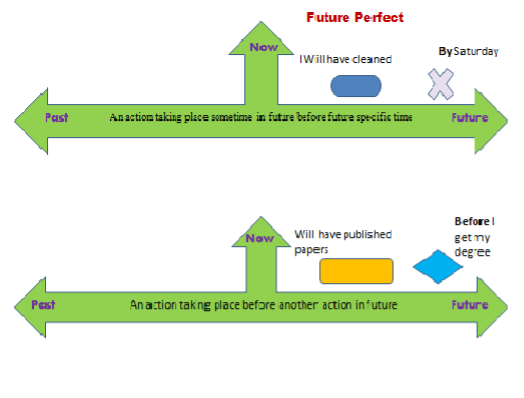
Употреба: Използваме бъдеще перфектно време в случаите, когато желаем да отразим бъдещо действие, което ще приключи до предварително зададен период от бъдещето.
Form
- A: He will have talked.
- N: He will not have talked.
- Q: Will he have talked?
Use
- action that will be finished at a certain time in the future
Signal Words
- by Monday, in a week
The future perfect is made with the future simple of 'have' (will have) and the past participle. For regular past participles add 'ed' to the verb ('play' becomes 'played').
Here's the positive:
By six pm tonight:
- I will have finished this book
- You will have studied the English tenses
- She will have cooked dinner
- He will have arrived
- We will have met Julie
- It will have stopped raining
- They will have left Japan
For the short form, we change will to 'll. But, when we are speaking, we also make 'have' shorter, so it sounds like I'll've finished (don't write this!). Here are some examples for you to listen to:
- I'll have finished this book
- You'll have studied the English tenses
- She'll have cooked dinner
- He'll have arrived
- We'll have met Julie
- It'll have stopped raining
- They'll have left Japan
Here's the negative:
By next week,
- I will not have finished this book
- You will not have studied the English tenses
- She will not have cooked dinner
- He will not have arrived
- We will not have met Julie
- It will not have stopped raining
- They will not have left Japan
Here's the short form. Listen to how I shorten 'have' when I'm speaking:
- I won't have finished this book
- You won't have studied the English tenses
- She won't have cooked dinner
- He won't have arrived
- We won't have met Julie
- It won't have stopped raining
- They won't have left Japan
Here's an exercise about negative
To make the question, just put 'will' before the subject:
'Yes / no' questions:
By next year,
- will I have finished writing this book?
- will you have studied all the English verb tenses?
- will she have graduated?
- will he have got married?
- will it have got colder?
- will we have met your boyfriend?
- will they have left their jobs?
'Wh' questions:
- When will I have finished writing this book?
- Why will you have studied all the English verb tenses by tomorrow?
- When will she have been here three weeks?
- Why will he have got married before June?
- Why will it have got colder by May?
- How will we have met your boyfriend by tonight?
- When will they have left their jobs?
Future Perfect Progressive
Употреба: Използваме съответното време за действие от бъдещето, което ще приключи до определен момент и същевременно е продължително по своя характер.
Future perfect progressive puts emphasis on the course / duration of an action taking place before a certain time in the future. It can also be used to express an assumption regarding a future action.
Future perfect progressive is not used very often as it can usually be replaced by future II simple.
Form
- A: He will have been talking.
- N: He will not have been talking.
- Q: Will he have been talking?
Use
- action taking place before a certain time in the future
- puts emphasis on the course of an action
Signal Words
- for …, the last couple of hours, all day long
EXERCISES
Future Simple
https://www.ego4u.com/en/cram-up/grammar/future-1-will/exercises?02
https://www.ego4u.com/en/cram-up/grammar/future-1-will/exercises?03
https://www.ego4u.com/en/cram-up/grammar/future-1-will/exercises?04
https://www.ego4u.com/en/cram-up/grammar/future-1-will/exercises
https://www.ego4u.com/en/cram-up/tests/future-1-will-1
https://www.ego4u.com/en/cram-up/tests/future-1-will-2
https://www.ego4u.com/en/cram-up/tests/future-1-will-3
Will or to be going to
https://elt.oup.com/student/solutions/preint/grammar/grammar_06_012e?cc=bg&selLanguage=bg
https://www.perfect-english-grammar.com/support-files/will_or_be_going_to.pdf
Present Simple of Present Continuous for Future
https://www.e-grammar.org/download/present-tenses-for-future-exercise-3.pdf
https://www.e-grammar.org/download/present-tenses-for-future-exercise-5.pdf
https://www.e-grammar.org/download/present-tenses-for-future-exercise-4.pdf
Future Continuous
https://www.ego4u.com/en/cram-up/grammar/future-1-progressive/exercises
https://www.english-practice.at/b1/grammar/tenses/t-039-future-forms.pdf
https://www.english-practice.at/b1/grammar/tenses/t-019-future-tenses.pdf
Future Perfect Simple
https://www.ego4u.com/en/cram-up/grammar/future-2-simple/exercises
https://elt.oup.com/student/solutions/int/grammar/grammar_05_022e?cc=bg&selLanguage=bg
https://www.ego4u.com/en/cram-up/grammar/future-2-progressive/exercises
Запознайте се с индивидуалното обучение по бизнес английски език.
Запознайте се с индивидуалното подготовка за интервю за работа на английски език.


